
Millets · a developing range of Indian nutritious cereals
Indian Millets
OMEXORR’s live About page describes millets and other commodities as planned catalogue additions as the range grows. Use this page to specify the millet species and target market; availability, origin, quality and shipment timing must be confirmed before a commercial offer.
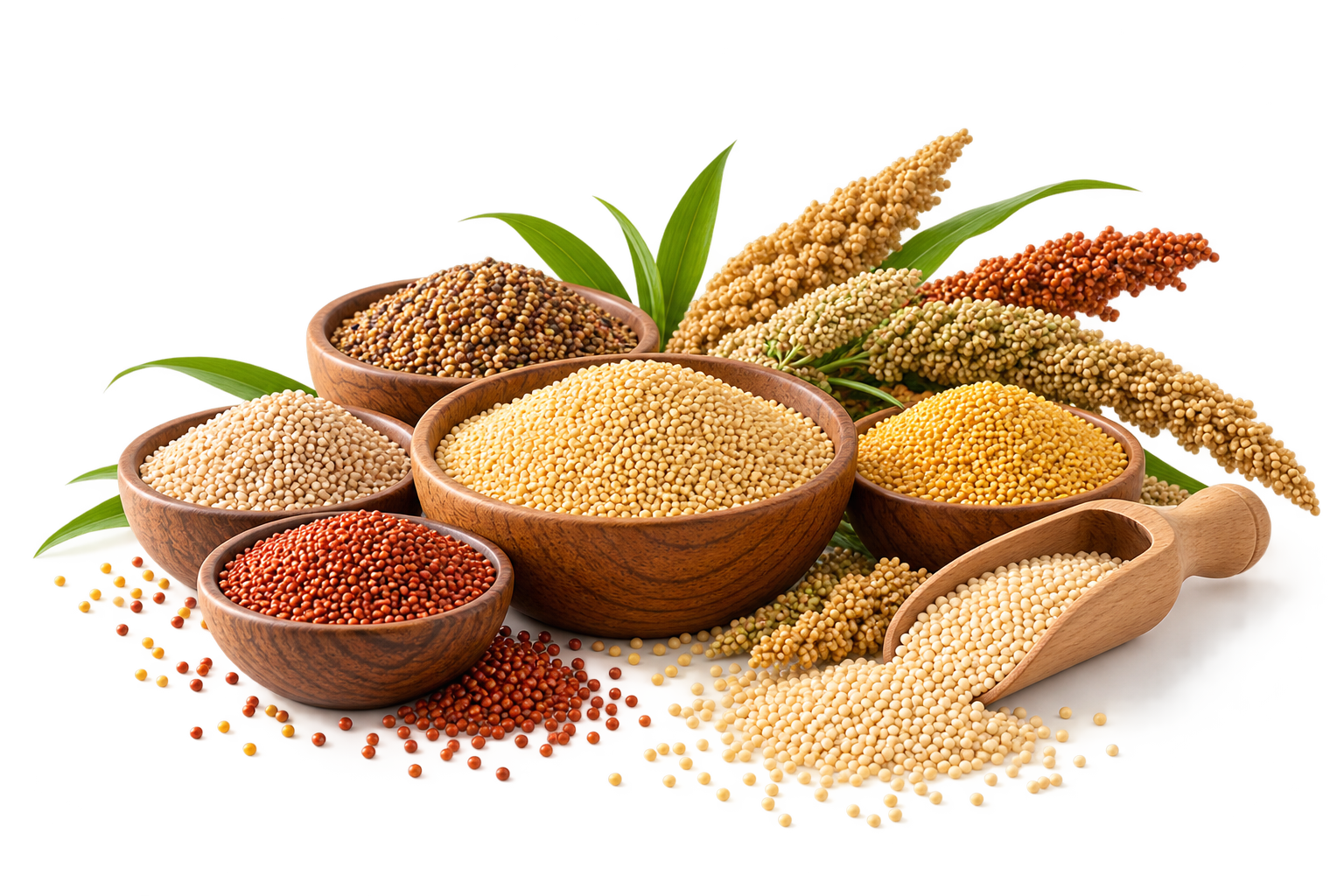
Product overview
A clear brief for your next order
OMEXORR’s live About page describes millets and other commodities as planned catalogue additions as the range grows. Use this page to specify the millet species and target market; availability, origin, quality and shipment timing must be confirmed before a commercial offer.
OMEXORR’s live About page describes millets as a planned catalogue addition as supply develops. Confirm species, origin, availability, quantity and timing before any offer is made.
Discuss this productProduct and sourcing details
Origin, grain profile and buyer specifications
The information below combines public crop and trade references with OMEXORR’s enquiry-led sourcing process. The source state and final measurements for a shipment should be confirmed against the specific lot.
| Product | Indian Millets |
|---|---|
| Range | APEDA groups Indian millets as jowar (sorghum), bajra (pearl millet), ragi (finger millet) and small millets including barnyard, proso, kodo, little and foxtail. |
| Species selection | Name the millet species, grain/seed use and whether whole grain or another form is required; HS code and import rules vary by species and form. |
| Availability | Supply is subject to species, season, source lot and supplier availability. Confirm before quoting. |
| Lot quality documents | Request species identity, crop/lot origin, cleaning/grade details, test reports and destination-specific certificates in the offer. |
| Origin reference | APEDA’s 2024–25 production reference lists Rajasthan (29.86%), Maharashtra (13.62%), Karnataka (12.91%), Uttar Pradesh (12.67%), Gujarat (7.25%), Haryana (6.92%), Madhya Pradesh (5.87%), Tamil Nadu (4.34%), Andhra Pradesh (2.25%) and Telangana (2.11%) among major millet-producing states. These national crop shares are market context, not a statement of OMEXORR’s current sourcing. Exact species and origin are confirmed per proposed lot. |
| OMEXORR supply status | OMEXORR’s live About page describes millets as a planned catalogue addition as supply develops. Confirm species, origin, availability, quantity and timing before any offer is made. |
HS / ITC-HS classification guide
Codes below are India tariff lines by product form. Export classification can change with processing, seed status, GI category and current DGFT notifications; confirm the final code with the customs broker for each declaration.
| Jowar grain (not seed) | 10082910 — Jowar millet, other than seed. |
|---|---|
| Bajra grain (not seed) | 10082920 — Bajra millet, other than seed. |
| Ragi grain (not seed) | 10082930 — Ragi millet, other than seed. |
| Barnyard grain (not seed) | 10082940 — Barnyard millet, other than seed. |
| Proso grain (not seed) | 10082950 — Proso millet, other than seed. |
| Foxtail grain (not seed) | 10082960 — Foxtail millet, other than seed. |
| Kodo grain (not seed) | 10082970 — Kodo millet, other than seed. |
| Little millet (not seed) | 10082980 — Little millet, other than seed. |
| Other millet (not seed) | 10082999 — Other millet classification; confirm species and tariff line. |
Indian export gateways and shipment planning
The company site describes OMEXORR as India-based and connecting buyers with Indian products; it does not name fixed dispatch ports. APEDA’s agri-export study identifies the ports below as important gateways. Its logistics study notes route choice depends on destination, commodity, cargo type, packaging and buyer requirements.
| Indicative gateways | Nhava Sheva, Mundra, Kandla and Kakinada appear in APEDA agricultural-export references as important gateways. These are routing references, not a published OMEXORR port commitment. |
|---|---|
| Port of loading | Confirm on the quotation after origin, shipment size, vessel schedule and destination are known. |
| Trade term | State requested Incoterm (for example FOB or CFR/CIF) in the enquiry; price and route are confirmed in the quotation. |
Packaging and order configuration
OMEXORR’s live site invites buyers to discuss packaging and bulk orders. Use this checklist to request a precise quote; each option requires confirmation for the selected lot.
| Pack style | Discuss retail packs or bulk export sacks; examples to request include laminated retail bags and woven polypropylene (PP) export sacks. Material and format must be confirmed for the lot and destination. |
|---|---|
| Pack weight | State requested net weight per pack and units per shipment. If useful, ask for quotes against retail sizes or bulk sizes such as 25 kg/50 kg; these are request examples, not published OMEXORR pack commitments. |
| Bag and liner | Confirm outer bag material (for example PP woven), food-contact liner, closure, moisture protection and destination rules. APEDA-published tender specifications have used 50 kg PP woven bags as one buyer-defined format; that is an example, not an OMEXORR standard. |
| Branding and marks | Provide artwork, label language, origin marking and importer-required text for review. |
| Loading plan | Specify palletized or floor-loaded shipment, container type and destination restrictions. |
| Quote confirmation | MOQ, lead time, crop/processing details, package availability, final port and price are confirmed per order. |
OMEXORR’s current site does not publish fixed pack weights, packaging materials, MOQ, lead times or dispatch ports. Request written confirmation before ordering.
What to include in your enquiry
Destination country and port · target quantity · product form/grade · requested pack weight and material · private-label needs · preferred Incoterm · required certificates or testing.
Send an enquiry